How to Increase Fashion Sales on Amazon India
Amazon fashion is won on the thumbnail, not the keyword. How Indian apparel sellers lift CTR, conversion and ad efficiency without a studio budget.
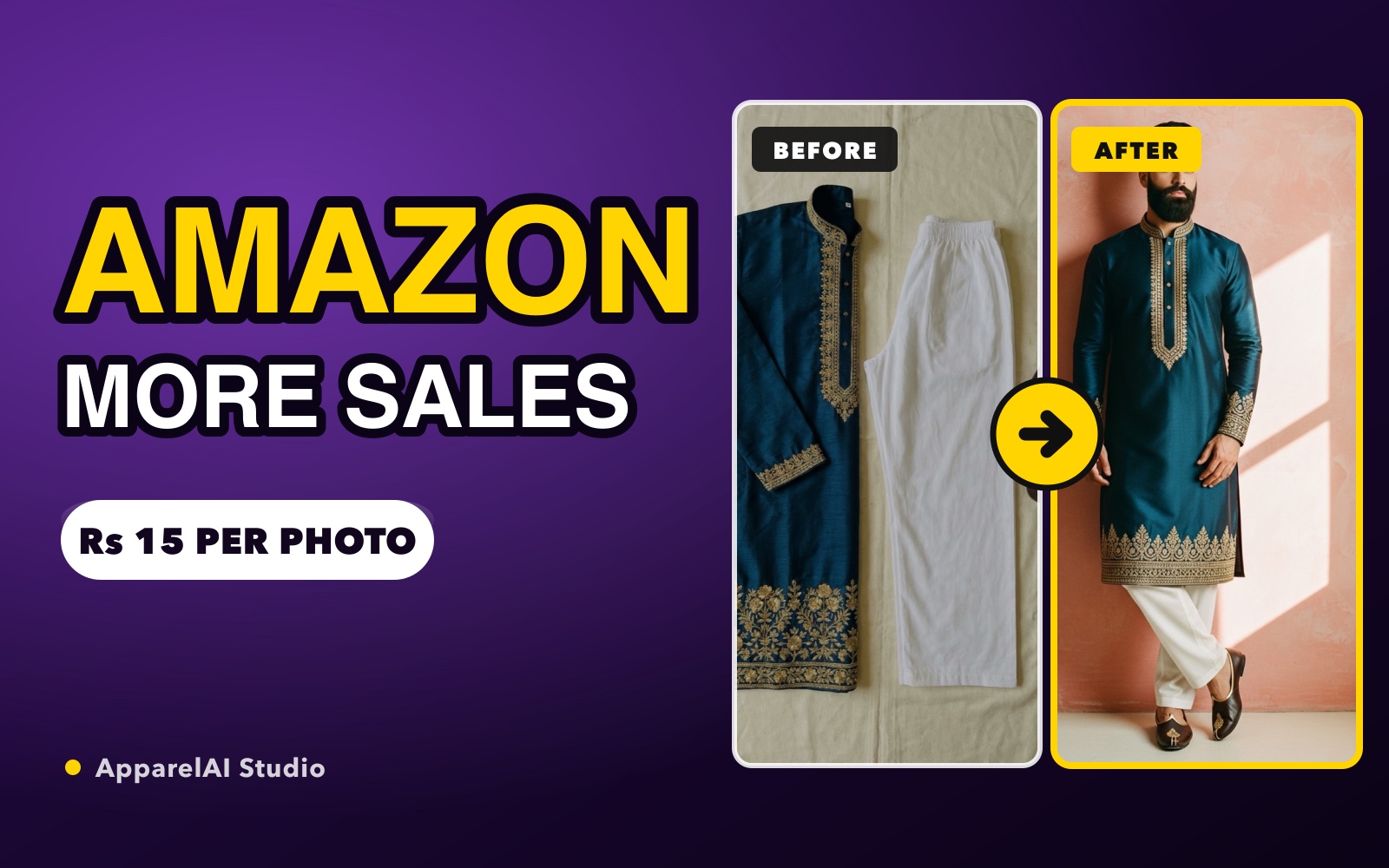
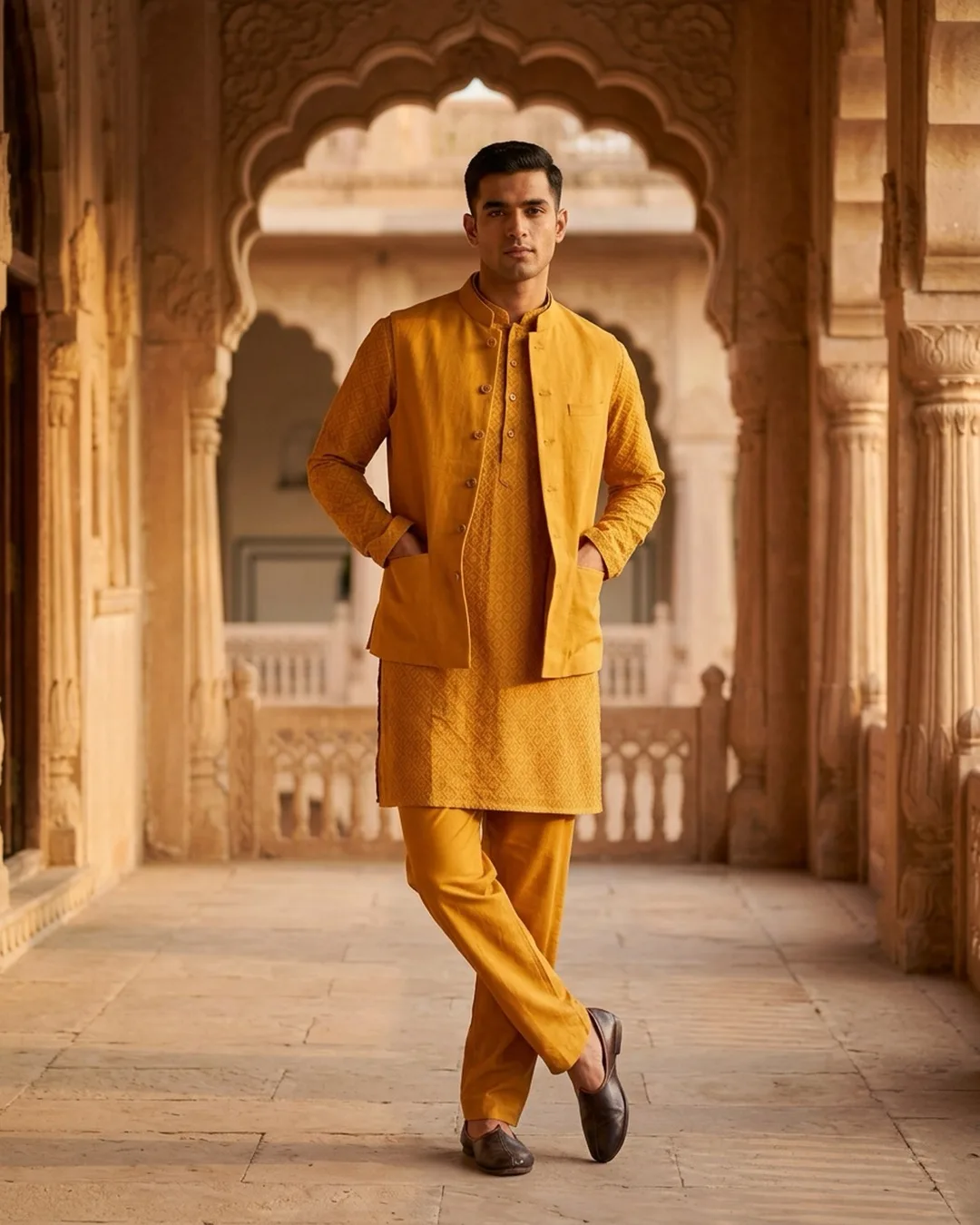
Amazon rewards a flywheel. Listings that get clicked and convert climb the results, which brings more impressions, which brings more sales. Listings that do not convert quietly sink, and no amount of keyword work pulls them back up.
For fashion sellers, the entry point to that flywheel is almost always visual. Here is where the leverage actually sits.
The two seconds that decide your click
An Amazon shopper on a phone sees your product as a square thumbnail in a grid of competitors. Title text is truncated. Reviews are a number. What they respond to is the main image, and the decision happens in roughly the time it takes to scroll past.
That single image controls your click-through rate. Click-through rate then feeds three things at once:
- •Organic rank. Amazon promotes listings that earn clicks and convert.
- •Ad efficiency. A higher click-through rate on the same ad spend lowers your effective cost per click and pulls ACoS down.
- •Everything downstream. No click means your A+ content, your reviews, and your pricing never get seen.
This is why sellers who obsess over keywords and ignore imagery plateau. The keyword gets you into the grid. The image gets you out of it.
Working inside Amazon's main image rules
Amazon's main image requirements for apparel are strict: pure white background, product filling most of the frame, no text, graphics, watermarks, or props. Sellers read that as "there is nothing to optimise here." That is wrong.
Within those rules you still control:
Whether the garment is on a body. For most apparel categories Amazon permits on-model main images, and on-model consistently outperforms flat lays for click-through. A shopper can read fit, drape, and proportion instantly.
How the garment is cropped. Filling the frame properly instead of leaving the product floating small in white space makes a visible difference at thumbnail size.
Colour accuracy. Washed out or oversaturated colour is the single most common cause of the "not as pictured" return, and returns in fashion are the margin killer.
For the full specification list, including flat-lay dimensions and category-specific rules, see our Amazon fashion photography guide.
The image sequence that sells
After the main image, you get a gallery. Most fashion sellers upload three photos and stop. That is a wasted asset, because the gallery is where objections get answered.
A sequence that works for apparel:
- Main: on-model, white background, garment filling the frame
- Back view: on the same model, same lighting
- Detail: fabric texture, weave, or embroidery close-up
- Fit reference: the garment on a different body type
- Lifestyle: the garment in a real setting, styled
- Information: size and fit guidance, fabric composition, care
Each image should remove one reason to hesitate. If an image does not answer a question a buyer would actually ask, replace it.
A+ content is the highest-return work most sellers skip
If you are brand registered, A+ content lets you replace the plain description with image modules, comparison charts, and styling context. Amazon reports it lifting conversion by roughly 5 to 15 percent on average, and for fashion specifically it does more, because fabric, fit and styling are exactly the things plain text cannot convey.
The practical value for apparel brands:
- •Comparison charts across your own range, which lifts average order value by moving buyers up your assortment
- •Fabric and construction detail that justifies a higher price point
- •Styling shots that show the garment as part of an outfit rather than an isolated item
- •Size and fit guidance in visual form, which cuts returns
A+ content needs lifestyle and styling imagery, which is exactly the imagery most sellers do not have and cannot justify shooting. That is the bottleneck worth solving.
Why the maths breaks for Indian sellers
Take a seller with 300 SKUs. A proper Amazon-ready image set is six or more images per listing. At Rs 300 to Rs 1,500 per garment for studio work, you are looking at Rs 90,000 at the very low end and several lakh at the realistic end, before A+ content assets and before the next season.
So the compromise happens. Three images per listing, flat lays only, no A+ modules, no lifestyle shots. The listing goes live technically complete and commercially weak, and the seller compensates with ad spend forever.
The workflow that fixes it
AI photography makes a full image set affordable per SKU rather than per shoot:
- Photograph each garment once as a flat lay or on a hanger, evenly lit
- Generate the on-model main image on a pure white background at Amazon's required dimensions
- Generate back and side views from the same source photo
- Generate the same garment on additional body types for the fit-reference slot
- Generate lifestyle and styled variants for the gallery and A+ modules
- Add real close-ups of fabric and construction from your own camera
Per-image cost lands under Rs 20 instead of hundreds of rupees per garment, and a 300-SKU catalog becomes a few days of work instead of a quarter-long production schedule.
For the styled outfit shots that A+ modules need, the AI outfit builder composes a top, bottom and accessories into a single styled photo from product shots you already have. The AI background changer handles lifestyle backdrops for gallery images where Amazon's white-background rule does not apply.
Do not skip real photography entirely
Two things still deserve a real camera:
Fabric close-ups. Texture, weave, sheen and embroidery detail are what justify a premium price, and buyers zoom in on them. Shoot these yourself.
Anything unusual about construction. Hardware, linings, unusual seams, reversible designs. If it is a selling point, photograph the real thing.
Use AI for the on-model and styled imagery where the cost and speed advantage is enormous, and real photography for the detail shots where authenticity carries the sale.
Bottom line
On Amazon, fashion sales follow click-through and conversion, and both are decided by images before a shopper reads a single word. The sellers who win are not the ones with the best keyword research. They are the ones with a complete, on-model, objection-answering image set on every listing, plus A+ content doing the persuasion work. The reason most catalogs do not look like that is cost per garment, and that is the constraint AI photography removes.
Ready to try AI product photography?
Start with 3 free images. No credit card required.
Start Free Photoshoot