Amazon Fashion Photography 2026: AI Policy
Amazon fashion photography requirements in 2026. Image specs, model rules, AI image policy, and tips for listing photos that convert.
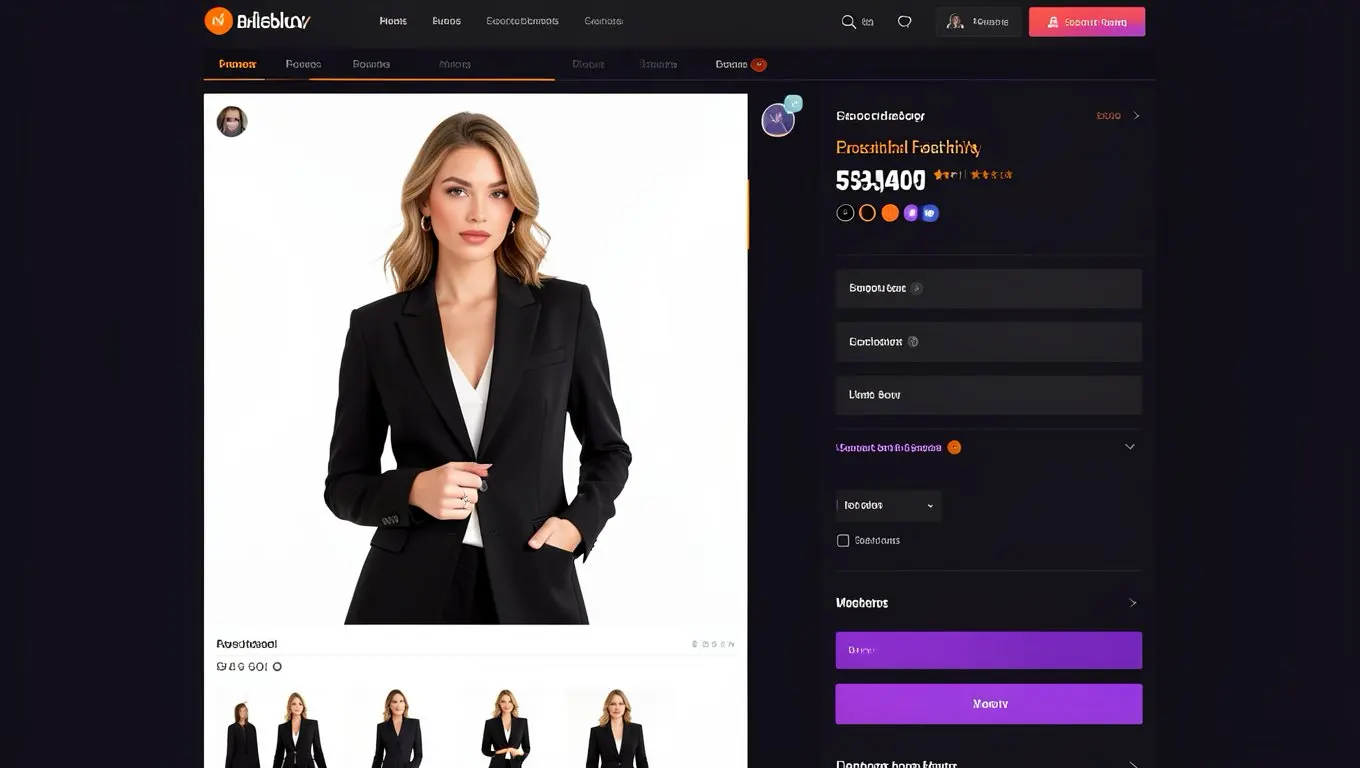
Amazon is the world's largest fashion marketplace. If you sell clothing there, your product photos aren't just important. They're everything. Amazon's A9 algorithm factors image quality into search ranking, and listings with poor photos get buried.
The good news: Amazon now explicitly permits AI-generated product images. The bad news: their requirements are still strict and specific. Here's what you need to know in 2026.
Amazon image requirements for fashion
Technical specifications:
- •Minimum 1000 px on the longest side (2000+ px recommended for zoom)
- •Maximum 10,000 px
- •Formats: JPEG (preferred), PNG, TIFF, or GIF
- •sRGB or CMYK color mode
- •Main image: pure white background, RGB (255, 255, 255)
Main image rules for adult clothing:
- •Product MUST be shown on a human model
- •Model must be standing (no sitting, kneeling, leaning, or lying down)
- •Entire garment must be visible in frame
- •No mannequins or dress forms allowed
- •No hangers visible
- •Product must fill 85%+ of the frame
Exception for kids/baby clothing:
- •Must be photographed flat (off-model)
- •No models allowed for children's apparel main images
Additional images (up to 9 total):
- •Lifestyle shots, detail close-ups, size charts, and alternate angles
- •More flexible rules on backgrounds and composition
- •Infographic images permitted on secondary slots
Amazon's AI image policy
This is the big change in 2025-2026. Amazon now explicitly allows AI-generated product images:
- •AI images are permitted as long as they accurately represent the physical product
- •No mandatory disclosure or labeling requirement
- •AI images are held to the same accuracy standards as traditional photos
- •Non-compliant listings (whether AI or traditional) may be suppressed in search
- •Amazon actively encourages sellers to use generative AI for listings
What this means practically: you can use AI to generate model shots, and Amazon won't penalize you for it. But if the AI output makes your product look different from reality (wrong color, exaggerated fit, missing details), your listing can still be suppressed or removed.
Why model photos matter on Amazon
Amazon's own data shows that fashion listings with on-model photos significantly outperform those with flat lays or mannequin shots. The model requirement for adult clothing isn't arbitrary. It's based on conversion data.
Buyers want to see how clothes fit on a real body. They want to gauge length, drape, and proportions. A flat lay of a jacket tells you almost nothing about how it actually looks when worn.
The problem is cost. Hiring models for hundreds of SKUs is expensive. A typical Amazon fashion seller with 300 products needs:
- •300 x 6 images = 1,800 photos minimum
- •Professional model photoshoots: $200-500 per look in the US
- •Total annual photography budget: $60,000-150,000
For many sellers, especially those selling mid-range products, that budget doesn't make sense.
Using AI for Amazon fashion photography
The workflow for Amazon-compliant AI photos:
Step 1: Photograph your garments
Take clean flat lay or mannequin photos with good lighting. This is your input image.
Step 2: Generate on-model shots
Upload to an AI photography tool. Specify model type and pose. Generate against a pure white background (RGB 255, 255, 255).
Step 3: Verify compliance
Check that the model is standing, the full garment is visible, and the product fills 85%+ of frame. Verify white background purity.
Step 4: Generate supplementary images
Create lifestyle shots, detail close-ups, and alternate angles for image slots 2-9.
Step 5: Upload and monitor
Upload to Seller Central. Monitor for any compliance flags in the first 48 hours.
Tips specifically for Amazon fashion sellers
Resolution matters more than you think. Amazon's zoom feature requires 2000+ px images. If your photos are only 1000 px (the minimum), buyers can't zoom in. Listings with zoom-enabled images have measurably higher conversion rates.
Use all 9 image slots. Sellers who use all available image slots see 15-25% higher conversion than those using 3-4 images. Mix model shots, lifestyle context, fabric close-ups, and size charts.
Consistency across your catalog. Using the same AI model across all your products creates a cohesive brand experience. Amazon's algorithm also factors in seller quality metrics. A consistent, professional-looking catalog improves your overall seller score.
Watch your color accuracy. The number one reason for returns on Amazon fashion is "item looks different from photo." If your AI tool shifts colors even slightly, you'll pay for it in return rates and negative reviews.
The bottom line
Amazon fashion photography in 2026 is a solved problem for sellers willing to adopt AI tools. The platform explicitly permits it, the quality is indistinguishable from traditional photography for most garment types, and the cost savings are enormous. The sellers who win are the ones who combine AI efficiency with attention to Amazon's specific compliance requirements.
Ready to try AI product photography?
Start with 3 free images. No credit card required.
Start Free Photoshoot