How to Create Model Photos Without Hiring Models
Spending thousands on photoshoots? Here are practical ways fashion brands are creating professional model photos without the traditional costs.
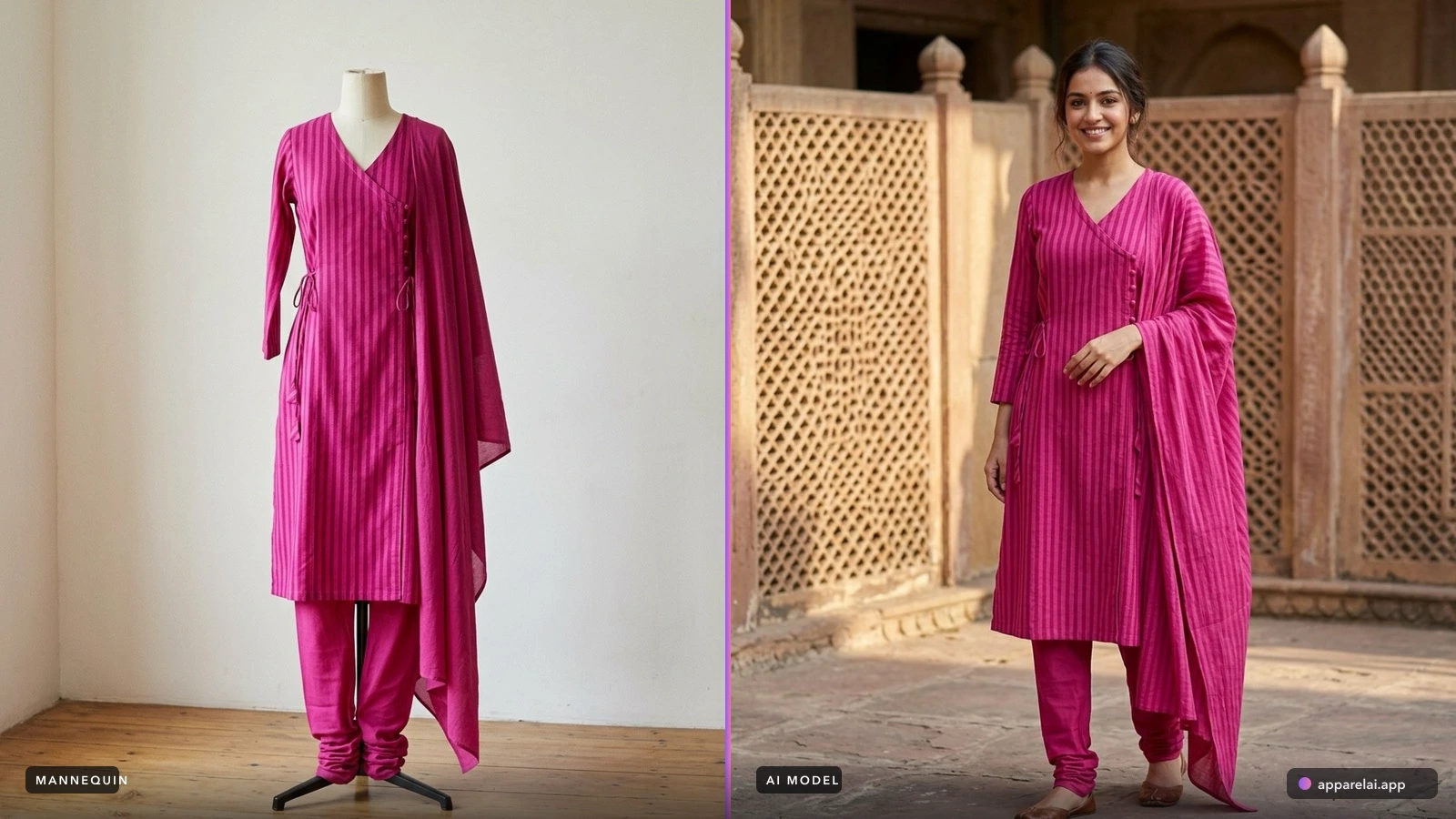
You just launched a clothing line. You have 50 products that need model shots. You called a few studios and the quotes came back: $200-500 per look, minimum 8-hour booking, model fees on top. For a small brand, that math doesn't work.
This isn't a new problem. Fashion brands have been wrestling with product photography costs since ecommerce became a thing. What's changed is the options available today.
The real cost of traditional photoshoots
Let's be honest about what a proper fashion photoshoot actually involves:
The basics: Studio rental runs $100-300 per hour in most cities. Models charge $150-500 per hour depending on experience. Then there's the photographer, stylist, and sometimes a makeup artist. A single day can easily hit $3,000-5,000.
The hidden costs: Reshoot days when lighting wasn't right. Returns and cancellations. Seasonal collection turnover meaning you repeat this every few months. Travel if your team isn't in a major city.
The timeline: Booking a studio 2-3 weeks out. Fitting sessions. The actual shoot day. Editing takes another week. For a fast-moving brand launching new products weekly, this cycle is too slow.
Most small brands do what they can. Phone photos against a white wall. Flat lays on a bedsheet. It works to start, but eventually it limits how professional your store looks.
What actually works today
There are several approaches brands are using, each with trade-offs.
Ghost mannequins
This is the industry standard for brands that can't afford models. You photograph garments on an invisible mannequin, then edit out the mannequin in post. The result shows the garment's shape without a human body.
Pros: Relatively affordable ($20-50 per image with editing), consistent results, works well for basics.
Cons: Products look stiff. No lifestyle feel. Shoppers can't picture themselves wearing it. Conversion rates are typically 20-40% lower than on-model imagery. Dedicated AI ghost mannequin generators now automate the post-production and drop cost per image to under $1.
Flat lay photography
Arrange garments on a flat surface, shoot from above. Done well, it has a clean editorial look.
Pros: You can do it at home with good lighting. Very consistent across products. Works great for accessories and detailed shots.
Cons: Doesn't show fit or drape. Certain garments (jackets, dresses) lose their appeal laid flat. Not great as primary product images.
AI-generated model photography
This is the newer option. Upload your garment photo and AI places it on a realistic virtual model. The technology has improved dramatically in the past year.
Pros: Cost per image drops to $1-5. Turnaround in seconds, not weeks. You can generate the same garment on different body types. Brand consistency through persistent model systems.
Cons: Not perfect for every garment type yet. Complex layering (open jackets over detailed shirts) can be tricky. You need a decent starting photo.
Making the switch: what to expect
If you're considering AI photography, here's what the transition actually looks like based on what we see brands doing:
Start with your bestsellers. Don't redo your entire catalog on day one. Pick 10-20 products and generate AI model shots alongside your existing photos. Compare the engagement.
Keep your flat lays. AI model shots work best as the primary hero image. Flat lays, detail shots, and lifestyle photos still complement the listing. Most successful stores use 4-6 images per product mixing these formats.
Test body type variety. One genuine advantage of AI is generating the same garment on different body types without additional cost. Brands that show size-inclusive imagery are seeing measurable improvements in conversion and reduced returns.
Watch your metrics. The numbers that matter: click-through rate from collection pages, time on product page, add-to-cart rate, and return rate. Give it 2-4 weeks of data before drawing conclusions.
The practical takeaway
There's no single right answer for every brand. Ghost mannequins work fine for basics and wholesale. Flat lays are great supplementary shots. AI photography fills the gap where you'd ideally have model shots but can't justify the cost.
The brands doing it well aren't choosing one method exclusively. They're mixing approaches based on what each product needs. A $15 t-shirt gets AI model shots and a flat lay. A $200 signature piece might still warrant a real photoshoot.
What's genuinely changed is that professional-looking model photography is no longer gated behind a $5,000 minimum investment. That's good for small brands, good for shoppers who want to see what clothes actually look like, and good for the industry overall.
Ready to try AI product photography?
Start with 3 free images. No credit card required.
Start Free Photoshoot