Brand Poses: 25 Fashion Poses That Sell Clothes
25 brand poses for clothing photos: catalog, movement, seated and detail fashion poses, plus how to pick the right ones for your products and platforms.
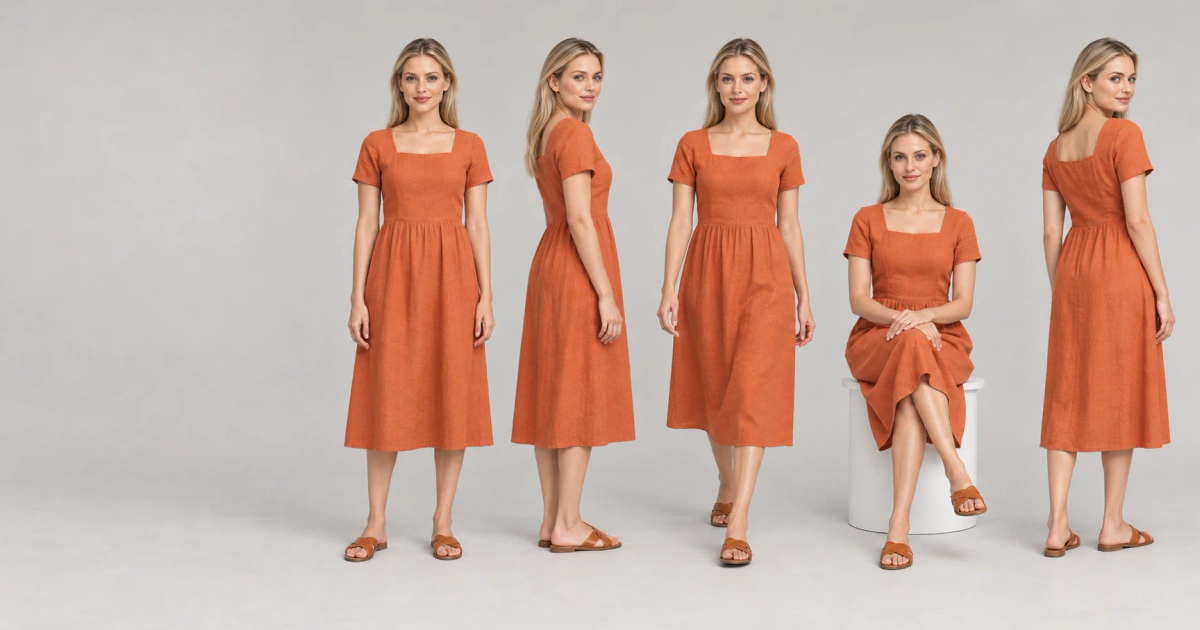
The right brand pose does two jobs at once. It shows the shopper exactly how the clothing fits, falls and moves, and it makes your catalog look like it belongs to one brand. Pick poses at random and your product pages feel messy. Pick them with a plan and every listing looks consistent, professional and easy to compare.
This guide gives you 25 fashion poses grouped by purpose, example poses for clothing brands by category, and a simple way to build a pose set your whole catalog can follow.
What Is a Brand Pose?
A brand pose is a pose your clothing brand uses again and again so that every product photo feels like part of the same collection. It is less about one dramatic shot and more about a repeatable system: the same angles, the same energy and the same framing across hundreds of products.
Good fashion poses for a brand have three things in common:
- •The garment comes first. Arms, hair and props never hide the neckline, waist, hem or key details.
- •They match your brand personality. A minimal luxury label uses still, upright poses. A streetwear brand uses relaxed, off-balance stances and movement.
- •They are repeatable. If a pose only works once, it is a campaign shot, not a brand pose.
25 Fashion Poses for Clothing Brands
Catalog Essentials (Use for Every Product)
These are the fashion photo poses shoppers expect on a product page. Shoot them first, every time.
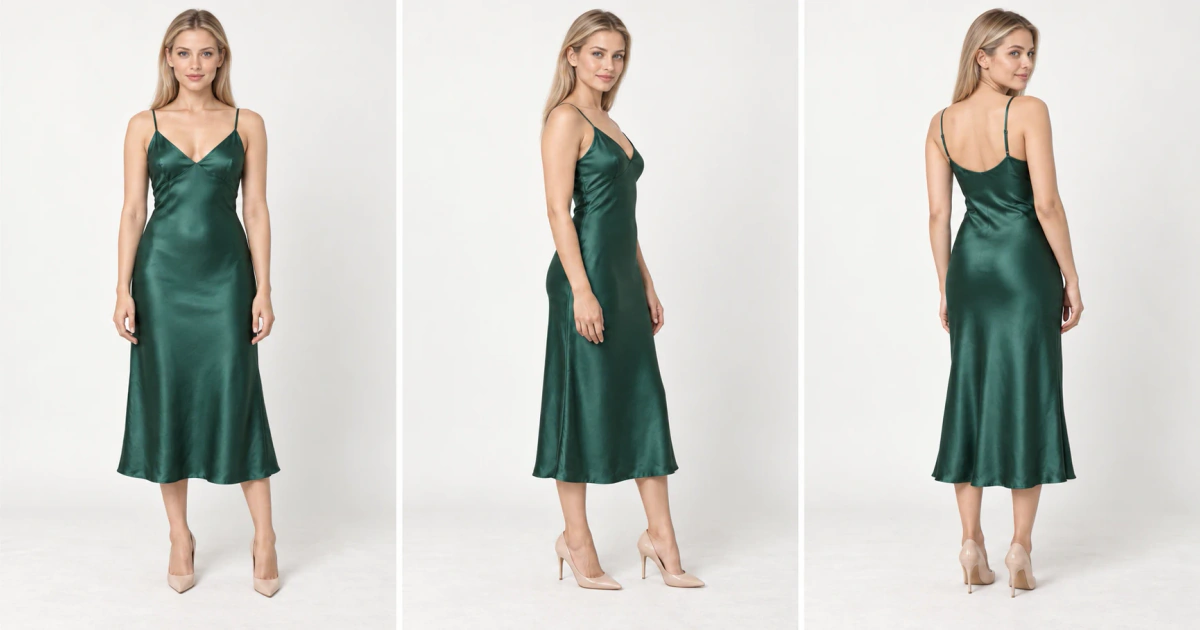
1. Straight-on front stand. Feet hip-width apart, shoulders relaxed, arms loose by the sides. This is your main listing image and the pose marketplaces handle best.
2. Weight shift (contrapposto). Put the weight on one leg and let the other knee soften. The hips tilt slightly and the garment drapes more naturally than in a stiff stand.
3. Hand on hip. One hand rests lightly on the hip, elbow pointing back. It creates space between arm and body so the waist and silhouette stay visible.
4. Hands in pockets. Ideal for trousers, jeans, jackets and hoodies. Keep only the fingers in the pocket so the fabric does not bunch.
5. Three-quarter turn. The body turns about 45 degrees from the camera while the face looks back toward it. This shows side seams, fit through the body and the depth of the garment.
6. Back view. Essential for backless dresses, printed backs, zips and blouse designs. Have the model look slightly over one shoulder so the shot still feels alive.
7. Side profile. A full side-on stand that shows the true fit of trousers, the length of a jacket and the shape of a skirt.
8. Over-the-shoulder look. The body faces away while the head turns back. It sells the back of the garment and adds personality without hiding the product.
Movement Poses (Show How the Fabric Moves)
Movement is where fashion posing turns a flat product into something a shopper can imagine wearing.
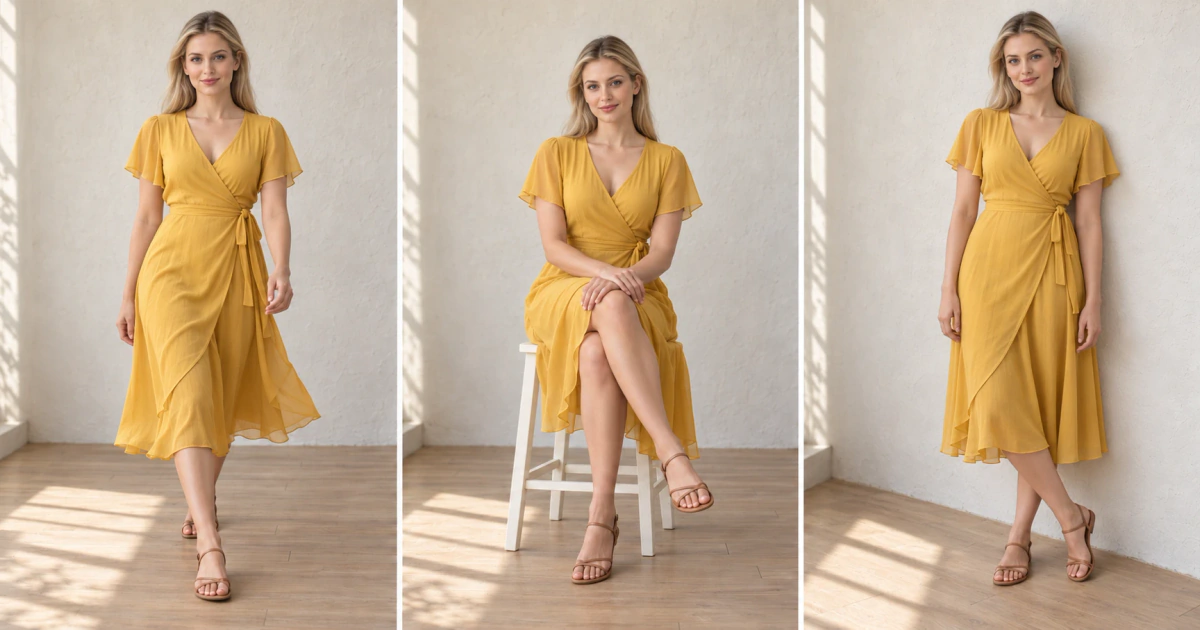
9. Walking toward the camera. Captured mid-step, this shows how a dress, wide-leg trouser or kurta moves in real life.
10. Side walk. Walking across the frame shows length and flow, and works especially well for maxi dresses and long coats.
11. Twirl or skirt swing. A half-spin lifts the hem of skirts, lehengas and flared dresses. Use it as a secondary image, not your main one.
12. Collar or hair touch. One hand lightly touches the collar or hair. It draws attention up to the neckline and makes the image feel candid.
13. Cuff adjust. The model adjusts a sleeve or cuff. Perfect for shirts, blazers and anything with a detailed cuff or button.
14. Candid look away. The model looks off-frame or down. It softens the image and suits lifestyle and social media posts.
Seated and Lean Poses (Lifestyle and Social)
Seated poses show how clothing behaves when the wearer sits down, which shoppers care about more than most brands realise.
15. Stool sit with crossed legs. Clean and studio-friendly. It shows how a skirt or trouser sits and stays elegant.
16. Wall lean. One shoulder or the back rests against a wall. Relaxed and natural, a strong choice for denim, knitwear and streetwear.
17. Step or floor sit. Sitting on steps or the floor gives a casual, editorial feel for lifestyle collections.
18. Table or ledge perch. Half-sitting on an edge keeps the line of the garment long while still looking effortless.
Detail and Crop Poses
These poses answer the questions a full-length image cannot.
19. Waist-down crop. Focuses on trousers, skirts and footwear pairings without the face competing for attention.
20. Hands-on-detail close-up. Hands frame embroidery, buttons, prints or fabric texture. Ideal for premium and handcrafted pieces.
21. Accessory hold. The model holds a bag, dupatta or jacket. It adds context and lets you cross-sell styling.
Category-Specific Poses
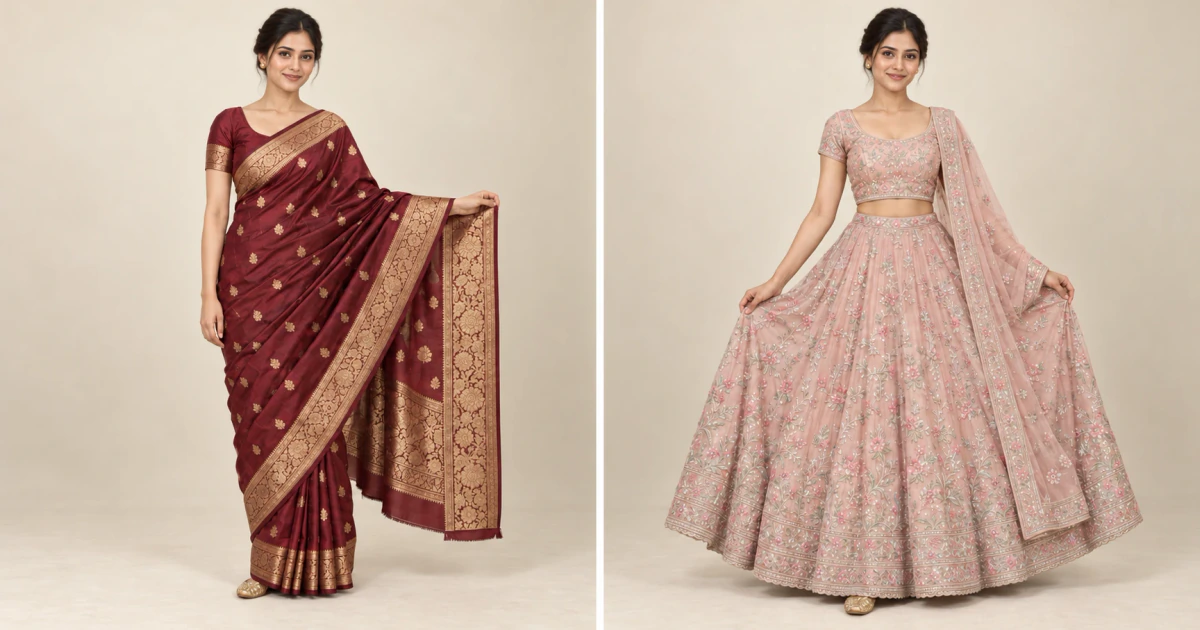
22. Saree pallu display. One arm extends slightly to open the pallu so its border and design are fully visible.
23. Lehenga skirt spread. The model holds the sides of the skirt outward to show the full flare and embroidery.
24. Menswear open jacket. One hand holds the jacket open to show the lining, the shirt underneath and the fit across the chest.
25. Activewear stretch. A light lunge, reach or stretch proves the fabric moves with the body.
Example Poses for Clothing Brands by Product Type
Not every pose suits every product. Use this as a starting pose set for each category.
| Product | Must-have poses | Optional extras |
|---|---|---|
| Dresses | Front stand, three-quarter turn, back view, walking | Twirl, stool sit |
| Sarees | Front stand, pallu display, back view (blouse), side profile | Walking, accessory hold |
| Lehengas | Front stand, skirt spread, back view | Twirl, seated |
| Kurtas and kurtis | Front stand, weight shift, three-quarter turn, back view | Walking, wall lean |
| Shirts and T-shirts | Front stand, hands in pockets, three-quarter turn, back view | Cuff adjust, wall lean |
| Jeans and trousers | Front stand, side profile, back view, waist-down crop | Walking, step sit |
| Menswear jackets | Front stand, open jacket, three-quarter turn, back view | Collar touch |
| Activewear | Front stand, back view, stretch | Walking, lunge |
How to Choose Your Brand Poses
Match the platform
Marketplaces and stores reward clean, consistent images. For your main image on Amazon, Myntra, Flipkart or Shopify, a front stand on a plain background is the safe choice. Save movement and lifestyle poses for secondary images, Instagram and ads, and always check each platform's current image guidelines before you upload.
Match your brand personality
Write down three words that describe your brand, then choose fashion poses that fit them:
- •Minimal or luxury: still, upright, controlled poses with few props.
- •Playful or youthful: movement, twirls, candid laughs.
- •Street or urban: wall leans, crouches, off-balance stances.
- •Traditional or festive: graceful stands, pallu and skirt displays, seated poses with jewellery in frame.
Build a fixed pose set
Choose four to six brand poses and use them, in the same order, for every product in a collection. Shoppers can compare items at a glance, and your category pages look tidy instead of random. This is the single biggest difference between a catalog that looks like a brand and one that looks like a marketplace dump.
Fashion Posing Tips That Make Clothes Look Better
Whichever fashion pose you choose, these small adjustments make the garment look its best.
- •Create space around the body. A small gap between arms and torso shows the true shape of the waist.
- •Bend something. A soft knee, elbow or wrist looks natural. Perfectly straight limbs look stiff.
- •Keep the chin slightly forward and down. It flatters the face and keeps the neckline clean.
- •Check the fabric after every pose. Pulled seams, twisted straps and bunched hems are what shoppers notice.
- •Keep the camera height consistent. Changing the angle between products makes the same size look different.
Posing for Fashion Shoots: Common Mistakes
- Hiding the product. Crossed arms over a printed top or hair covering a neckline defeats the purpose of the photo.
- Too many different poses. Twenty unique poses per product confuses shoppers. Four to six consistent ones sell better.
- Movement as the main image. A twirl looks great but rarely works as the first image on a product page.
- Ignoring the back. Shoppers want to see the back of the garment, especially for blouses, gowns and occasionwear.
- Changing models every shoot. A different face on every product weakens your brand and makes fit harder to judge.
How to Get These Brand Poses Without a Photoshoot
Planning poses is the easy part. Booking a model, photographer and studio for every new drop is where time and money disappear. That is why more clothing brands now create their fashion photo poses with AI.
With ApparelAI you upload a flat lay or hanger photo of your garment and generate it on a model in the poses your catalog needs:
- •Match any pose. On the Business and Agency plans, upload a reference photo and the model copies its pose and framing. Save it to your library and reuse it across your whole catalog.
- •Keep the same face. Create a consistent AI brand model so every product features the same recognisable model.
- •Generate more poses from one photo. Turn a finished image into fresh poses while keeping the same scene and model.
- •Start from a template. Browse ready-made photoshoot templates for studio, editorial, street and festive looks.
The poses guide in the ApparelAI docs lists every preset pose and shows how to upload your own reference.
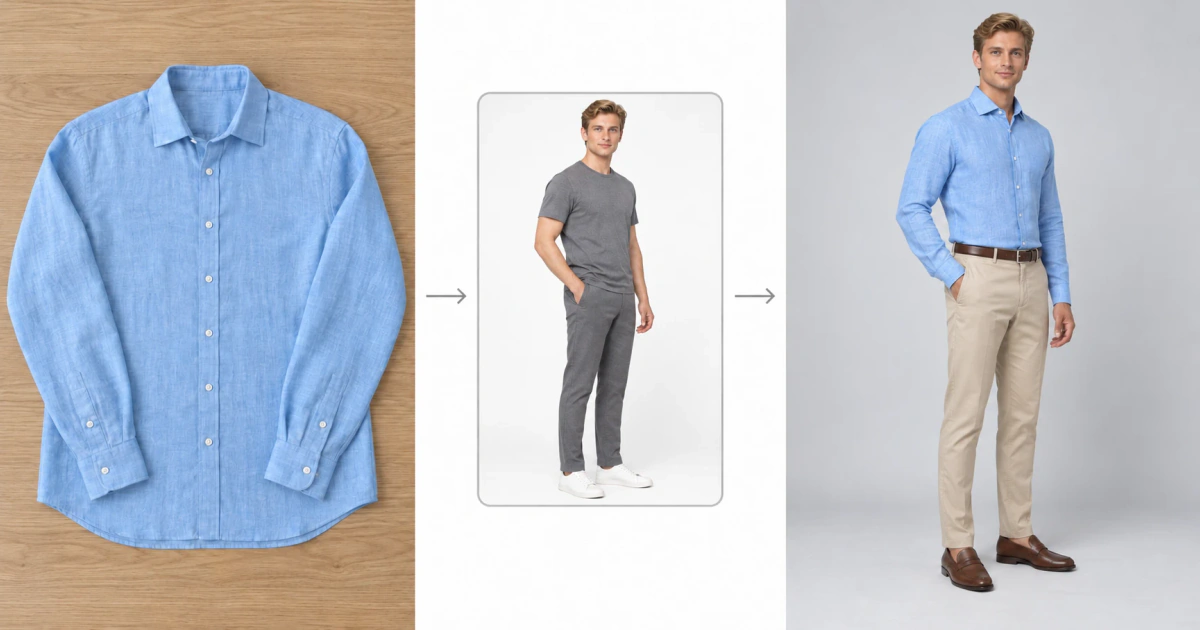
Your fixed pose set becomes a repeatable setup instead of a booking every season. For a full comparison of costs, read our guide on AI vs traditional fashion photography.
Try ApparelAI free with 3 credits → No credit card required.
Frequently Asked Questions
What is a brand pose in fashion photography?
A brand pose is a repeatable pose a clothing brand uses across its product photos so that the catalog looks consistent. Common brand poses include the front stand, three-quarter turn, back view and a walking shot.
How many poses should each product photo set have?
Four to six poses per product is enough for most clothing brands: a front view, a three-quarter turn, a back view, a detail shot and one movement or lifestyle pose.
What are the best fashion poses for ecommerce?
The best fashion poses for ecommerce keep the garment fully visible. Use a straight-on front stand for the main image, then a three-quarter turn, back view and side profile to show the fit from every angle.
What poses work best for sarees and lehengas?
For sarees, use a front stand, a pallu display with one arm extended and a back view that shows the blouse. For lehengas, add a skirt spread to show the full flare and embroidery.
Can AI create model poses for my clothing brand?
Yes. AI fashion tools like ApparelAI let you upload your garment and generate it on a model in different poses. On the Business and Agency plans, ApparelAI also lets you upload a reference photo for the model to copy and reuse the same poses across your whole catalog.
Ready to try AI product photography?
Start with 3 free images. No credit card required.
Start Free Photoshoot