How to Sell on AJIO: A Brand Guide to More Sales
How to sell on AJIO and grow once you are on: registration, commission, and why this curated marketplace demands imagery most sellers cannot afford to shoot.
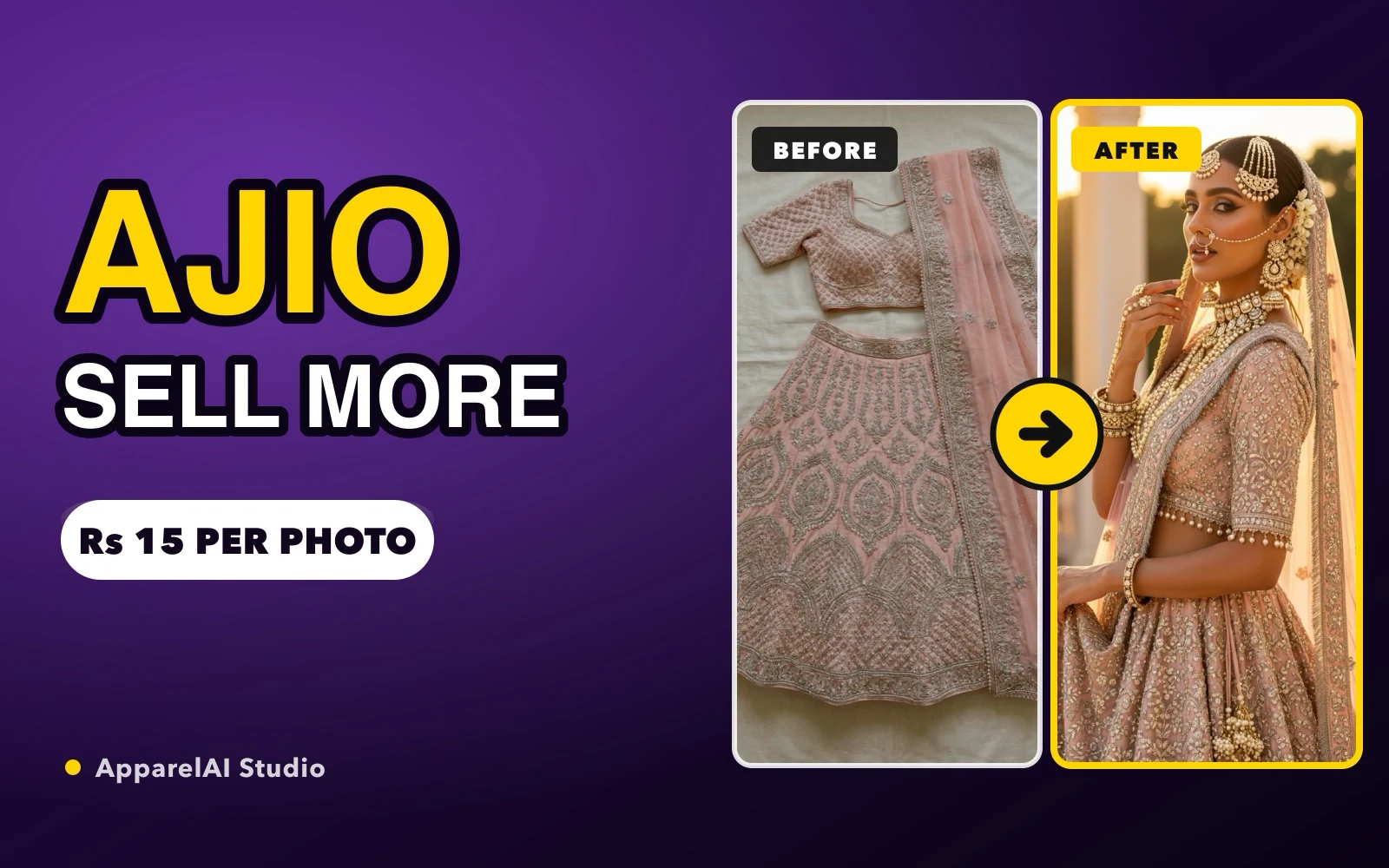
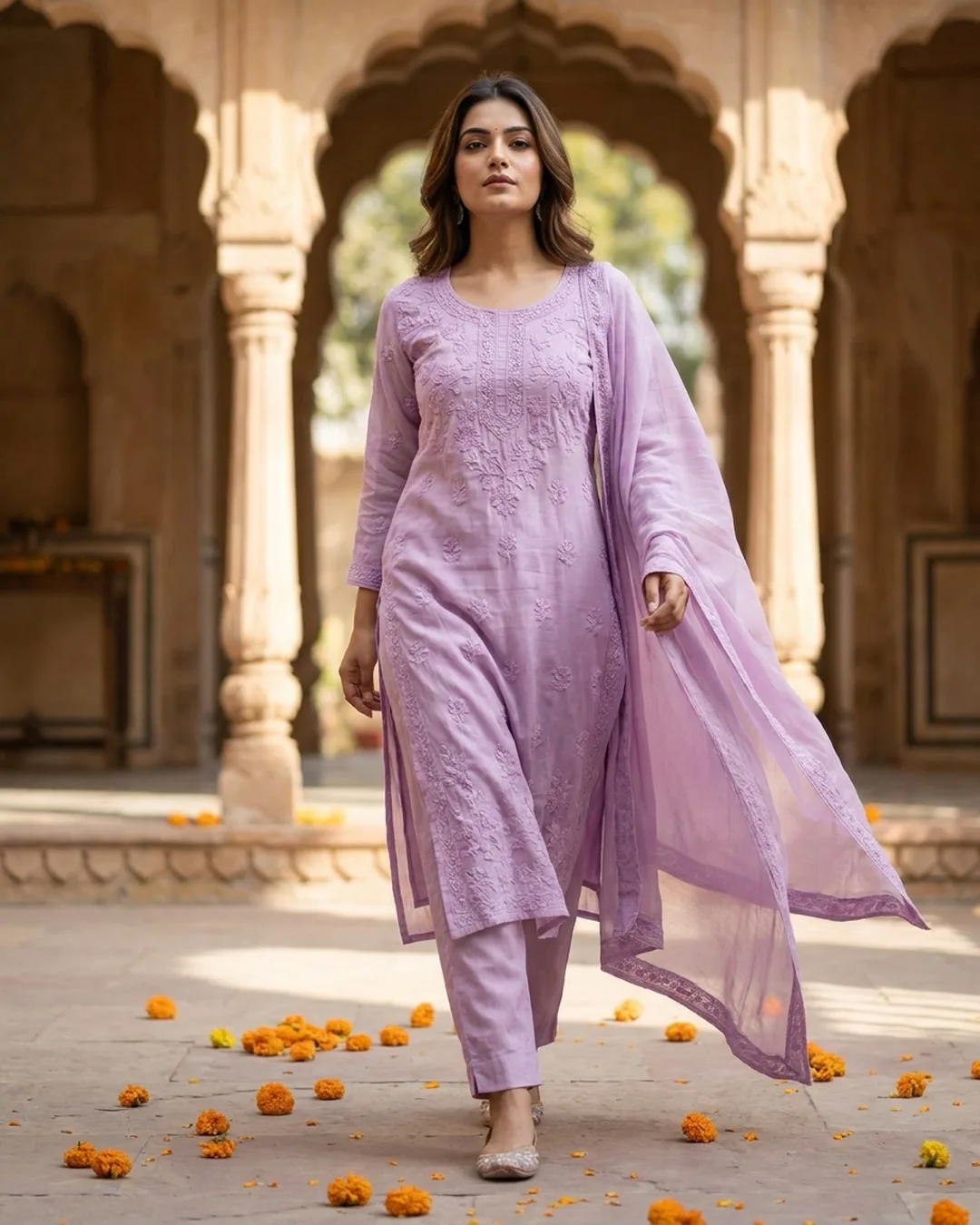
AJIO sits in a different position to the other Indian fashion marketplaces. Backed by Reliance Retail, it curates who gets to sell, leans trend-forward rather than value-first, and carries a noticeably higher average order value than the volume platforms.
For a brand, that combination is attractive. It also changes what your catalog has to do.
Getting on: registration and the bar it sets
Getting onto AJIO is not the open self-serve process you get elsewhere. Registration runs through Reliance's supplier portal, and applications are reviewed rather than auto-approved, typically over one to two weeks.
What you need before you start:
- •A registered business. AJIO does not onboard individual sellers. Sole proprietorship, partnership, LLP or private limited all qualify.
- •GST number, PAN and a business bank account.
- •Brand documentation. A trademark certificate for branded goods, or a self-declaration where that route applies.
- •An approved category. Fashion, lifestyle and beauty.
Commission generally sits in the 8 to 10 percent range depending on category and the terms you agree.
Two practical implications:
Your brand is being assessed, not just your paperwork. An existing track record on Amazon, Flipkart or Myntra strengthens an application considerably, because it demonstrates you can operate at marketplace standards.
Your catalog is part of the pitch. Whatever imagery you present during onboarding sets the impression of where your brand sits. Phone photos on a bedsheet read as a value seller, and AJIO is not shopping for value sellers.
Higher order values change the job of your photos
This is the part most brands underestimate.
On a Rs 399 product, the photo's job is to establish that the item is real and roughly as described. On a Rs 2,500 to Rs 6,000 product, the photo has to justify the price. Those are different tasks.
A buyer spending Rs 4,000 on a dress is asking:
- •Does this look worth the money
- •How does the fabric actually fall
- •Would this fit into how I dress
- •Is this brand credible
A clean white-background flat lay answers none of those. It is a specification photo, not a persuasion photo. It tells a shopper what the item is while saying nothing about whether it is desirable, and desire is what carries a premium price point.
What AJIO buyers respond to
Styled, not isolated. The garment shown as part of an outfit rather than floating alone. Shop-the-look context both raises perceived value and lifts basket size, because buyers add the pieces around the hero item.
Fabric that reads on screen. Drape, weight and texture are what separate a Rs 4,000 garment from a Rs 900 one visually. If your photos flatten the fabric, you have erased the reason for your price.
Consistency across the range. A brand where every product looks like it came from the same world reads as a brand. A catalog where each product was shot differently reads as a reseller, and that perception caps what you can charge.
Editorial mood over catalog neutrality. Lifestyle backdrops, considered lighting, and a coherent aesthetic. This is the register AJIO's audience is browsing in.
The consistency problem
Here is the trap for a growing brand.
You shoot your first collection properly. Good photographer, real models, a coherent look. Then you add products through the season, and those get shot separately, often by someone else, months later, in different light. Six months in, your catalog is visually incoherent. Same brand, four different aesthetics.
On a curated platform, that incoherence is expensive. It is the difference between reading as a brand and reading as a marketplace seller who happens to have a trademark.
Traditional photography makes consistency structurally hard, because every shoot is a separate production with different variables. Keeping a model, a lighting setup, and a mood identical across a year of drops is genuinely difficult and genuinely expensive.
Producing editorial imagery at catalog scale
This is where a persistent AI model system solves a problem that money alone does not.
You define a model once: the face, the body type, the styling register that fits your brand. Then every product you add for the next year is shot on that same model, in the same lighting, against the same backdrop family. Your January drop and your November drop look like they belong to the same brand, because visually they do.
The workflow:
- Create a persistent brand model that matches your customer and your positioning
- Photograph each new garment once as a flat lay or hanger shot
- Generate on-model imagery using the same model and lighting setup every time
- Generate styled and lifestyle variants for the gallery
- Add real fabric and construction close-ups from your own camera
Cost falls to under Rs 20 per image against Rs 500 to Rs 1,500 per garment for studio work, and the consistency is structural rather than something you have to fight for at every shoot.
For the styled shots that lift order value, the AI outfit builder composes a complete look from individual product photos you already have. For seasonal backdrop changes across the whole catalog at once, the AI background changer handles it without a reshoot. The full AI fashion photography tools set covers the rest.
Where real photography still earns its place
On a premium marketplace, do not fully automate the things that justify your price.
Fabric and craftsmanship close-ups. If you are charging for quality, show the real quality. Weave, embroidery, hardware, lining, finishing.
Anything genuinely distinctive. Unusual construction, hand-work, a signature detail. That is your differentiation and it deserves a real camera.
The efficient split is AI for the on-model and styled imagery, which is most of your image volume, and real photography for the handful of detail shots that carry the premium.
Practical priorities
- Get your brand model and visual register defined before you upload a large catalog
- Lead with styled, on-model imagery rather than white-background flat lays wherever the slot allows
- Fill the gallery: styled hero, back view, fabric detail, fit reference, lifestyle
- Keep the aesthetic identical across drops. Consistency is the brand signal
- Refresh lifestyle backdrops seasonally so the catalog feels current
Bottom line
AJIO gives you a more valuable customer and asks for a higher standard in return. The brands that do well there treat their catalog as brand-building rather than record-keeping, and the visual gap between them and everyone else is mostly a production budget gap. Persistent AI model photography closes that gap by making editorial-grade, visually consistent imagery affordable across an entire catalog, which is exactly the standard a curated marketplace is selecting for.
Ready to try AI product photography?
Start with 3 free images. No credit card required.
Start Free Photoshoot