Size-Inclusive Fashion Photography with AI
How fashion brands are using AI to create size-inclusive product imagery without the cost of multiple model bookings per garment.
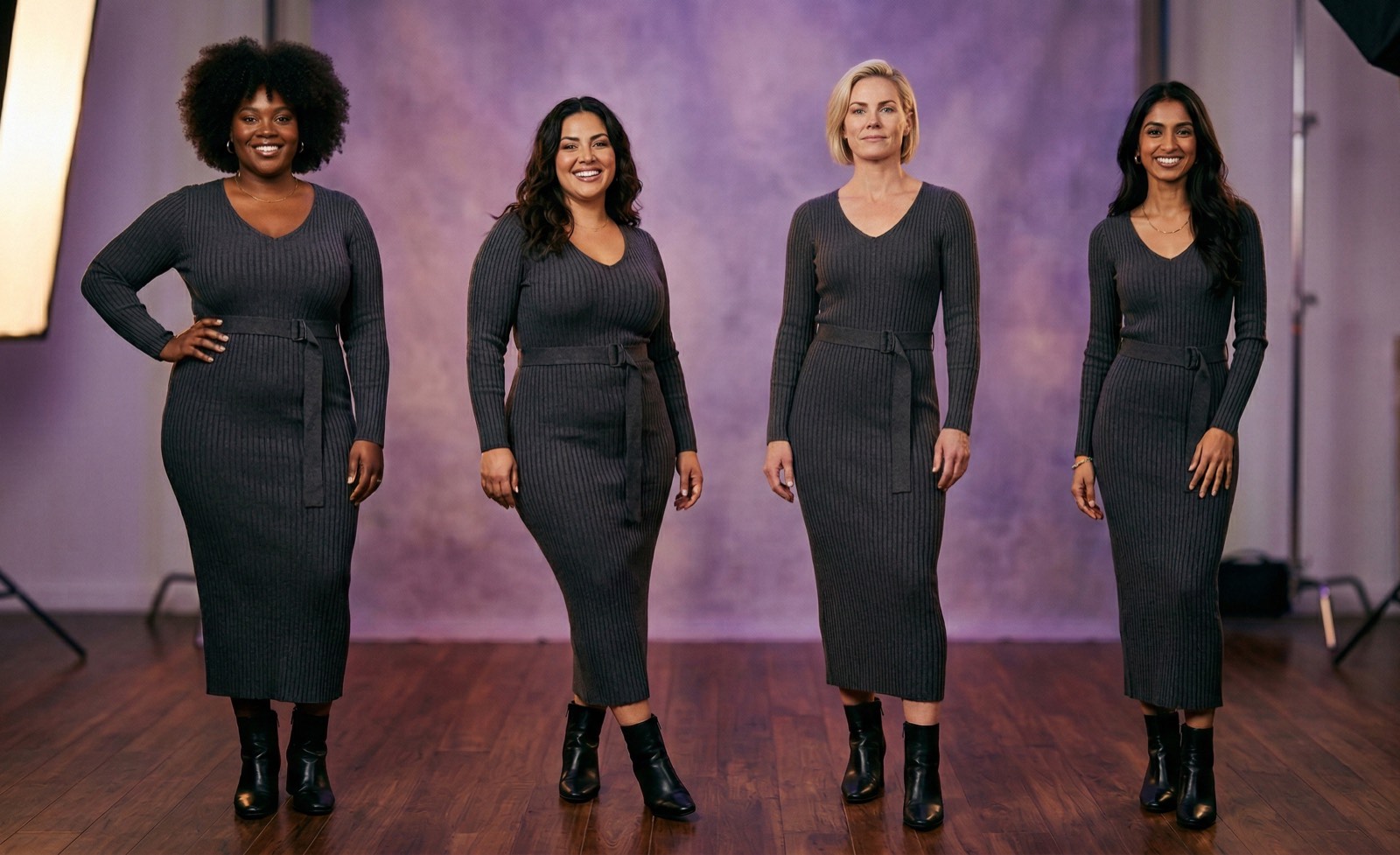
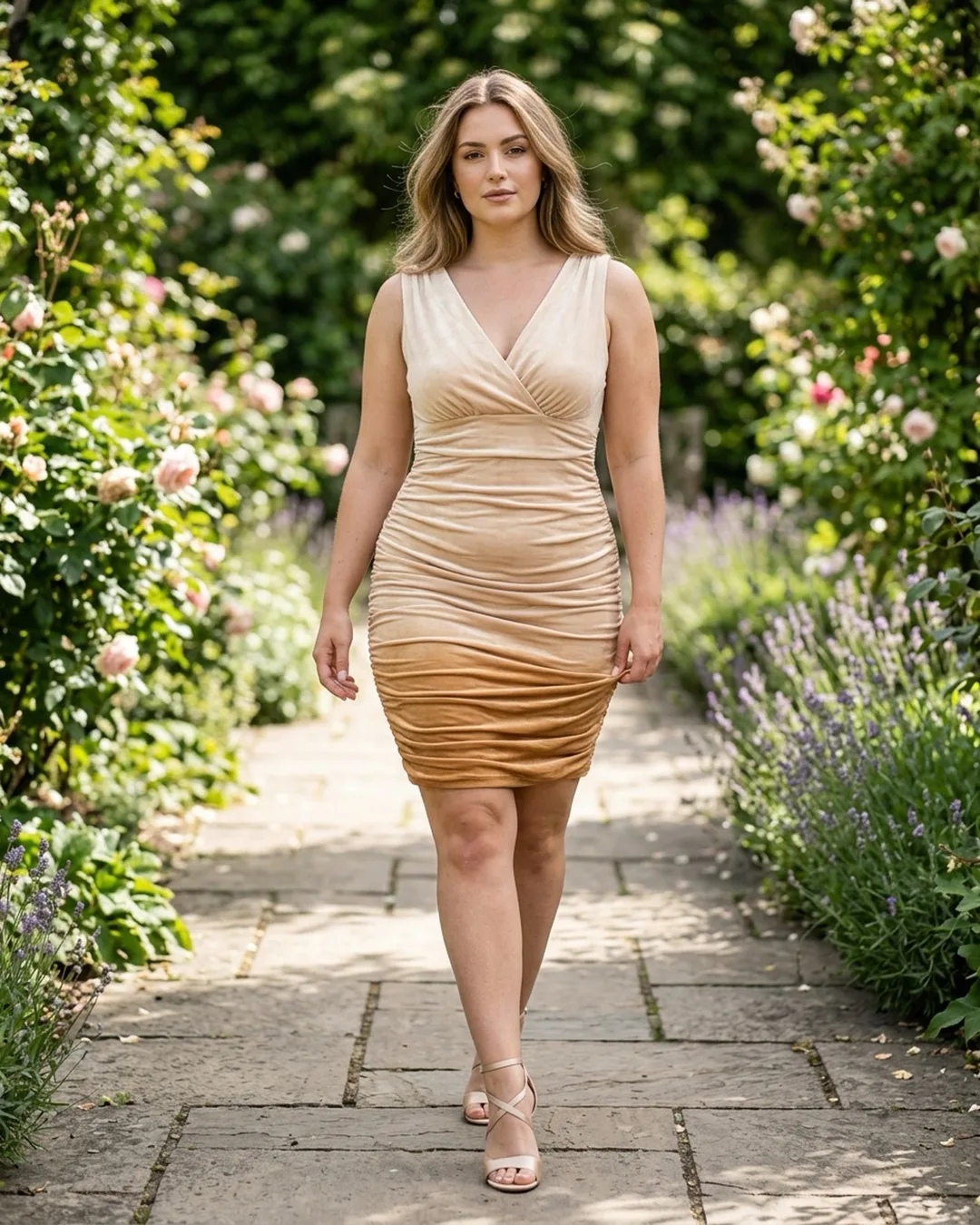
Here's a frustrating reality in fashion ecommerce: most product photos show garments on a single body type. Usually a size 2-4 model. If you sell sizes XS through 3XL, the majority of your customers are buying based on how a garment looks on someone who doesn't represent them.
Brands know this is a problem. Customers complain about it in reviews. Return rates for larger sizes are consistently higher - partly because shoppers can't visualize fit on their body type.
The traditional solution is simple but expensive: book multiple models across different sizes for every photoshoot. That doubles or triples an already expensive process.
AI is changing this equation in a meaningful way.
Why size-inclusive imagery matters (the data)
This isn't just about doing the right thing - though it is. The business case is compelling:
Return rates. Brands that show garments on size-representative models report 10-20% lower return rates for extended sizes. When a customer sees how a garment actually drapes on a body similar to theirs, they make better purchasing decisions.
Conversion rates. A study from 2025 showed that shoppers are 35% more likely to add to cart when they see a product on a model matching their body type. That's not a marginal difference.
Customer loyalty. Inclusive imagery builds trust. Customers who feel represented by a brand's imagery have higher lifetime value and lower churn.
Market size. The plus-size fashion market is projected at $700+ billion globally. If your imagery only speaks to straight-size customers, you're leaving significant revenue on the table.
The old way vs. the new way
Traditional inclusive photography
To show one garment across four body types:
- •Book 4 models: $500-1,500 per model per day
- •Fit each size of the garment to each model
- •Shoot each combination (4x the shots, 4x the time)
- •Post-production editing for each image set
Cost per garment: $800-2,000 for four body types
For 100 products: $80,000-200,000 annually
This math is why most brands don't do it. Even large brands typically show extended sizes on a single model, which doesn't solve the visualization problem.
AI-powered inclusive photography
Upload one garment photo. Use our AI fashion photography tools to generate it on four different body types.
Cost per garment: $4-20 for four body types
For 100 products: $400-2,000 annually
Same result for the shopper. Fraction of the cost for the brand.
Getting it right: what matters
AI makes inclusive imagery affordable, but affordability alone isn't enough. It has to be done well. Here's what we've learned from brands that are doing this successfully:
Realistic body representation
The models need to look like real people, not distorted versions of a thin model. Good AI tools generate anatomically proportional bodies across the size spectrum - not just scaled-up versions of a straight-size figure.
What to look for: natural fat distribution, realistic proportions, skin texture that looks real at every size.
Accurate garment fit
This is where some AI tools fall short. A garment on a plus-size body shouldn't look like the same garment stretched. It should reflect how that garment actually fits and drapes on a larger frame.
Well-fitted garments on larger bodies often look different from the same garment on a smaller body - tighter in some areas, flowing differently in others. Good AI captures this.
Diverse representation beyond size
Size is one dimension. The most impactful inclusive imagery also varies:
- •Age range: Showing the same garment on a 25-year-old and a 45-year-old
- •Ethnicity: Representing your actual customer base
- •Skin tone: Ensuring garment colors look accurate across different complexions
Consistent model identity
If you're showing one garment on four body types, those models should still feel like they belong to the same brand. Consistent lighting, posing style, and background keeps the visual cohesion intact.
This is where persistent model systems shine - you create four "brand models" of different body types and reuse them across your entire catalog.
Implementation tips
Start with your extended sizes. If you already have good imagery for straight sizes, prioritize generating AI imagery for your underserved sizes first. This addresses the biggest gap with the least disruption.
A/B test the impact. Run a 30-day test with AI inclusive imagery on your top 20 products. Compare:
- •Conversion rate by size
- •Return rate by size
- •Time on product page
- •Add-to-cart rate
Let shoppers choose their view. Some brands implement a body type toggle on product pages, letting shoppers see garments on the body type closest to their own. This requires more images per product but creates a significantly better shopping experience.
Be authentic in your messaging. Don't just show inclusive imagery - acknowledge it. A simple note like "Shown on sizes S, L, and 2XL" builds trust. Shoppers appreciate transparency.
What's working in the real world
A mid-size activewear brand we know implemented AI-generated size-inclusive imagery across their catalog of 150 products. Their results after 90 days:
- •Extended size conversion rate increased 28%
- •Return rate for sizes XL+ dropped 18%
- •Average order value across all sizes increased 8% (shoppers bought more when they felt confident about fit)
- •Customer satisfaction scores improved measurably
The total cost of generating inclusive imagery for their entire catalog: under $500. The revenue impact: tens of thousands in additional sales and saved returns.
The bigger picture
Inclusive imagery isn't a trend. Consumer expectations are shifting permanently. Younger shoppers especially expect to see themselves represented in the brands they buy from.
AI has removed the cost barrier that made inclusive imagery impractical for most brands. The question isn't whether you can afford to show diverse body types - it's whether you can afford not to.
For brands willing to take the step, the technology is ready, the economics work, and the customer response is overwhelmingly positive.
Ready to try AI product photography?
Start with 3 free images. No credit card required.
Start Free Photoshoot