Ghost Mannequin vs AI Model Photos (2026)
Ghost mannequin photography costs $52-75 per image and takes hours of editing. AI model photos cost under $1 and take seconds. But is the quality comparable?
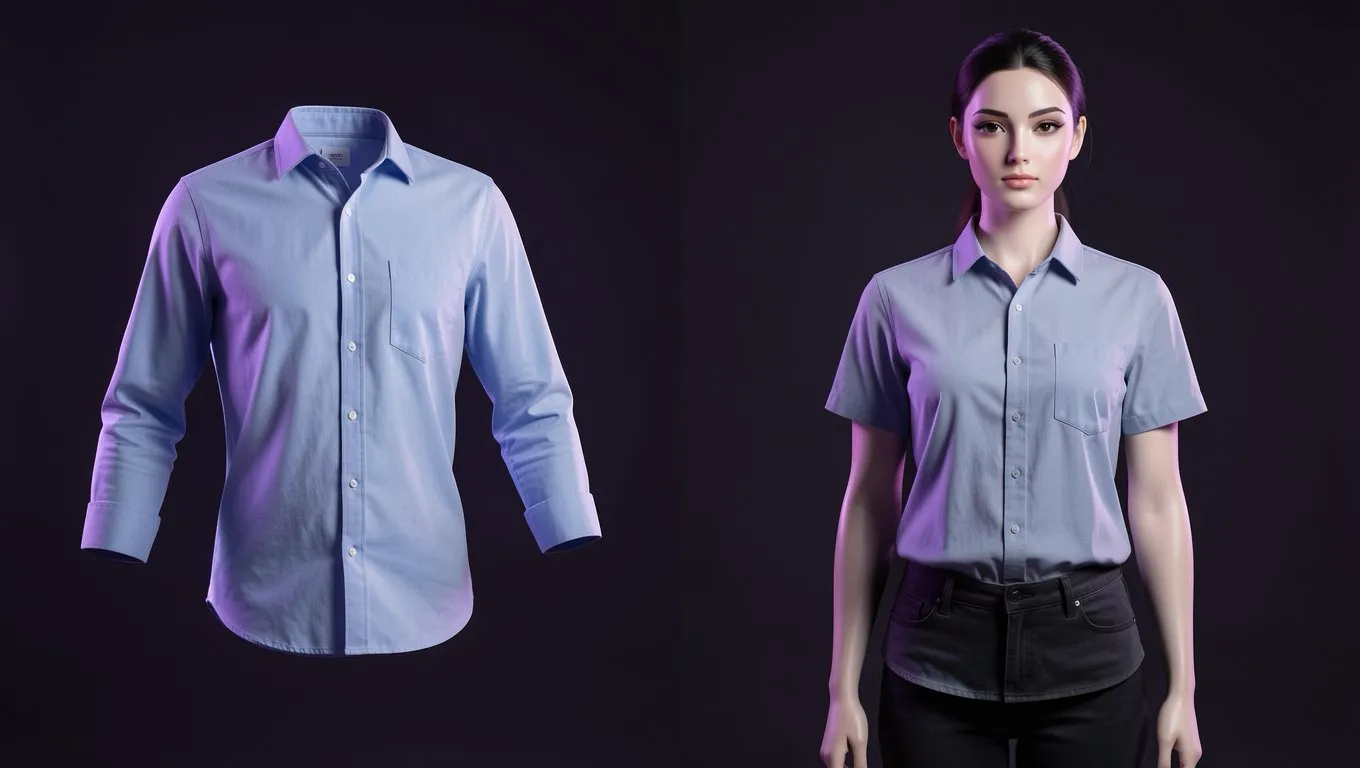
Ghost mannequin photography was a clever invention. Put a garment on a mannequin, photograph it, then Photoshop the mannequin out. You get a floating garment that shows its shape without the distraction of a body. For years, it was the affordable middle ground between flat lays and model photography.
But it's 2026, and ghost mannequin is no longer the best option for most fashion sellers.
How ghost mannequin works
The traditional process:
- Dress a mannequin in the garment
- Photograph from the front
- Flip the garment inside out, photograph the interior (for the "neck join")
- Composite the images in Photoshop, removing the mannequin
- Retouch the seams, joints, and any visible mannequin remnants
Time per image: 30-60 minutes of skilled Photoshop work. An experienced retoucher can do 10-15 garments per day.
Cost per image: $52-75 for full-service (photography + editing). $0.49-3.00 for editing-only if you shoot yourself.
Quality: Clean, consistent, and professional. Shows the garment's shape, collar structure, sleeve length, and overall silhouette. No human body to distract from the product.
The limitation ghost mannequin can't overcome
Ghost mannequin photos look professional. But they don't sell as well as on-model photos.
Shoppers are approximately 60% more likely to purchase when they see a garment on a human body compared to a mannequin or flat lay. The reason is psychological: buyers need to imagine themselves wearing the product. A floating garment doesn't help with that.
Ghost mannequin photography was the best compromise when the only alternative was expensive model photoshoots. But now there's a third option.
AI model photography: the new middle ground
AI model photography takes your flat lay or mannequin photo and generates a realistic model wearing the garment. The result looks like a traditional model photoshoot. Modern AI ghost mannequin alternatives skip the Photoshop step entirely.
Time per image: 10-30 seconds.
Cost per image: $0.10-1.00 depending on the tool and plan.
Quality: Photorealistic on standard garments. The technology has improved to the point where 71% of shoppers can't distinguish AI-generated model photos from real ones.
Side-by-side comparison
| Factor | Ghost Mannequin | AI Model |
|---|---|---|
| Cost per image | $52-75 (full service) | $0.10-1.00 |
| Time per image | 30-60 minutes | 10-30 seconds |
| Shows garment shape | Yes (excellent) | Yes |
| Shows fit on body | No | Yes |
| Conversion impact | Medium | High |
| Model consistency | N/A | Same model across catalog |
| Body type variety | N/A | Multiple body types possible |
| Skill required | High (Photoshop expertise) | Low (upload and generate) |
| Scale (500 products) | 4-6 weeks | 1-2 days |
When ghost mannequin still makes sense
Ghost mannequin isn't completely dead. It still has legitimate use cases:
Catalog grid consistency. On a collection page where you show 50 products in a grid, ghost mannequin photos create an extremely clean, uniform look. Every garment is shown at the same angle, same scale, with no model variation to create visual noise.
Wholesale and B2B. If you're selling to retailers (not end consumers), ghost mannequin is the industry standard for lookbooks and order sheets. Retailers want to see the garment without the distraction of a model.
Detail focus. Some garments have construction details (stitching, hardware, collar structure) that show better without a body. Ghost mannequin is ideal for these technical shots.
When AI models are the clear winner
Product detail pages. The page where someone decides to buy. On-model imagery consistently outperforms ghost mannequin here.
Social media and marketing. Nobody shares a ghost mannequin photo on Instagram. Model photos (real or AI) drive engagement.
Size-inclusive representation. You can generate the same garment on different body types with AI. Ghost mannequin shows one shape: the mannequin's.
High volume catalogs. If you have 500+ products, the time and cost savings of AI are overwhelming.
The hybrid approach
The most successful fashion brands we see use both:
- •Ghost mannequin or AI model for the catalog grid view (consistency)
- •AI model photos as the primary product detail page image (conversion)
- •Real photos for fabric close-ups and detail shots (trust)
This gives you consistency where it matters, conversion where it matters, and authenticity where it matters.
Bottom line
Ghost mannequin was the best affordable option for a decade. AI model photography is now better, faster, and cheaper for most use cases. If you're still paying $50+ per ghost mannequin image, you're spending 50-100x more than you need to for results that convert less well.
Keep ghost mannequin in your toolkit for specific use cases. But for your primary product imagery? AI models are the clear winner in 2026. Browse our full AI fashion photo toolkit to see what's possible.
Ready to try AI product photography?
Start with 3 free images. No credit card required.
Start Free Photoshoot