Scale Fashion Photography: 10 to 500 Products
The operations guide to catalog photography at scale. How fashion brands photograph and process 500+ products per catalog cycle using AI workflows.
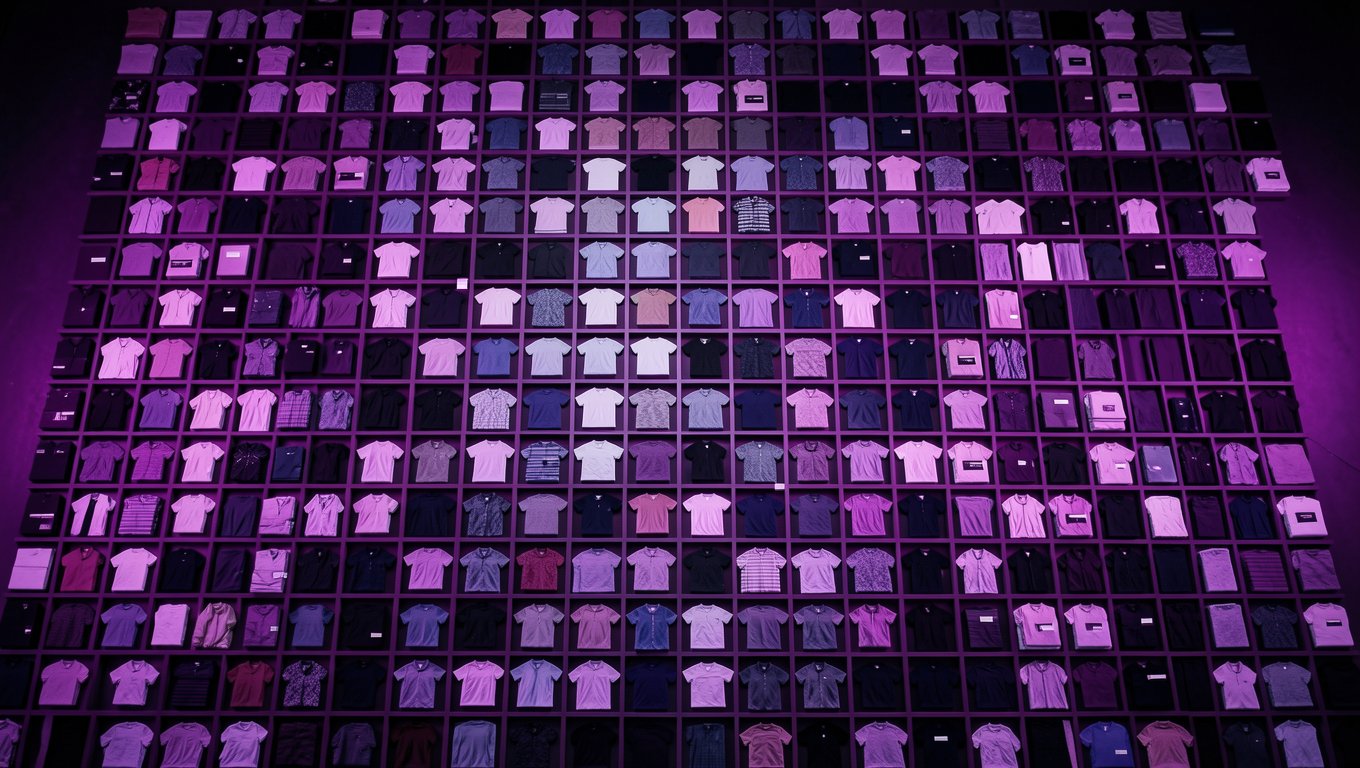
When you have 20 products, photography is a creative task. When you have 500, it's a logistics problem.
The brands that scale photography successfully aren't the ones that hire more photographers. They're the ones that build systems where photography throughput grows without proportional cost increases.
The traditional scaling problem
Traditional product photography costs scale linearly with volume:
| Products | Cost (traditional) | Timeline |
|---|---|---|
| 50 | $2,500-5,000 | 1 week |
| 200 | $10,000-20,000 | 3-4 weeks |
| 500 | $25,000-50,000 | 6-8 weeks |
| 1,000 | $50,000-100,000 | 12-16 weeks |
At 500+ products, the timeline becomes the bigger problem than the cost. A 6-8 week photography cycle means your products launch weeks after they could have, and fast fashion moves too quickly for that delay.
The AI scaling advantage
AI photography costs scale logarithmically. The per-image cost decreases as volume increases, and the timeline barely changes:
| Products | Cost (AI) | Timeline |
|---|---|---|
| 50 | $100-500 | 1-2 days |
| 200 | $300-1,000 | 2-3 days |
| 500 | $500-2,000 | 3-5 days |
| 1,000 | $800-3,000 | 5-7 days |
The reason: the bottleneck isn't generation (that's automated) but input photography and review. Both are parallelizable.
Building a high-throughput photography operation
Input photography station
For high volume, your flat lay station needs to be optimized for speed:
Physical setup:
- •Permanent overhead camera mount (eliminates tripod setup time)
- •Fixed lighting position (no adjustment between products)
- •White surface at waist height (no bending)
- •Steaming station adjacent (garments go from steamer to photo surface in one move)
- •Rack of garments prepared and steamed in advance
Throughput: With this setup, one person can photograph a garment every 2-3 minutes. That's 20-30 per hour, 150-200 per day.
Quality control: Use a tethered camera that shows images on a monitor in real time. Catch issues immediately rather than discovering them during AI processing.
Batch processing workflow
Morning (Day 1): Photograph 150-200 garments
Afternoon (Day 1): Upload all photos to AI platform. Start batch generation with persistent model settings.
Evening (Day 1): AI processes overnight. Most platforms can handle 500+ images in a batch.
Morning (Day 2): Review generated images. Flag any failures for re-generation.
Afternoon (Day 2): Export in platform-specific formats. Begin uploading to marketplaces.
Day 3: Continue processing next batch of 150-200 garments while previous batch uploads.
Parallel processing
The key to scale is parallelizing what can be parallelized:
- •While one person photographs batch 2, another reviews AI output from batch 1
- •While AI processes batch 3, the team uploads batch 2 to marketplaces
- •Platform-specific format conversion runs in parallel with review
With three people and this pipeline, a team can process 500 products in under a week, continuously flowing from photography to AI to marketplace upload.
Common scaling mistakes
Mistake 1: Treating every product equally. Not every product deserves 8 high-quality images. Classify your products:
- •Hero products (top 20%): Full AI model treatment plus real detail photos
- •Standard products (60%): AI model shots plus one detail photo
- •Test products (20%): AI model shots only, upgrade if they sell
Mistake 2: Manual formatting for each platform. If you sell on 4 marketplaces and each needs different image specs, automate the format conversion. Batch processing scripts can convert 500 images from one format to all four platform requirements in minutes.
Mistake 3: Not using a persistent model. Generating random models for each product breaks visual consistency. Set your model once and reuse it across the entire catalog. Change only the model, not the approach.
Mistake 4: Sequential review. Don't review images one by one. Display them in a grid view and scan for outliers. Flag only the ones that need attention. At 500 products, reviewing every image individually adds days to your timeline.
The economics at scale
At 500 products, the per-image economics become compelling:
Traditional photography:
- •$25-50 per product (negotiated studio rate)
- •Total: $12,500-25,000 per catalog cycle
- •Annually (4 seasonal cycles): $50,000-100,000
AI photography:
- •$1-4 per product (all-in cost including input photography time)
- •Total: $500-2,000 per catalog cycle
- •Annually: $2,000-8,000
Savings: $48,000-92,000 per year
That's not a marginal improvement. It's a structural cost advantage that can be reinvested into product development, marketing, or lower prices.
When to keep traditional photography in the mix
Even at scale, certain situations warrant traditional photoshoots:
- •Campaign imagery: Your seasonal campaign hero shots benefit from real creative direction
- •New collection launches: The first 5-10 hero pieces might warrant a real shoot for PR and media
- •Complex styling: Heavily layered or accessorized looks that AI can't compose from individual pieces
- •Video content: While AI video is improving, traditional video still has an edge for brand storytelling
The smart approach: use traditional photography for 5-10% of your catalog (the hero pieces) and AI for the remaining 90-95%.
Bottom line
At scale, photography is an operations problem, not a creative one. The brands that process 500+ products efficiently have built systems: standardized input photography, batch AI processing, parallel workflows, and automated format conversion. The creative decisions (model choice, styling, backgrounds) are made once and applied systematically.
The result: catalog-quality imagery at catalog speed, without catalog-level costs.
Ready to try AI product photography?
Start with 3 free images. No credit card required.
Start Free Photoshoot