AI Saree Photography for Ecommerce
Sarees are the hardest garment for AI photography. What works, what doesn't, and how to get on-model saree photos.
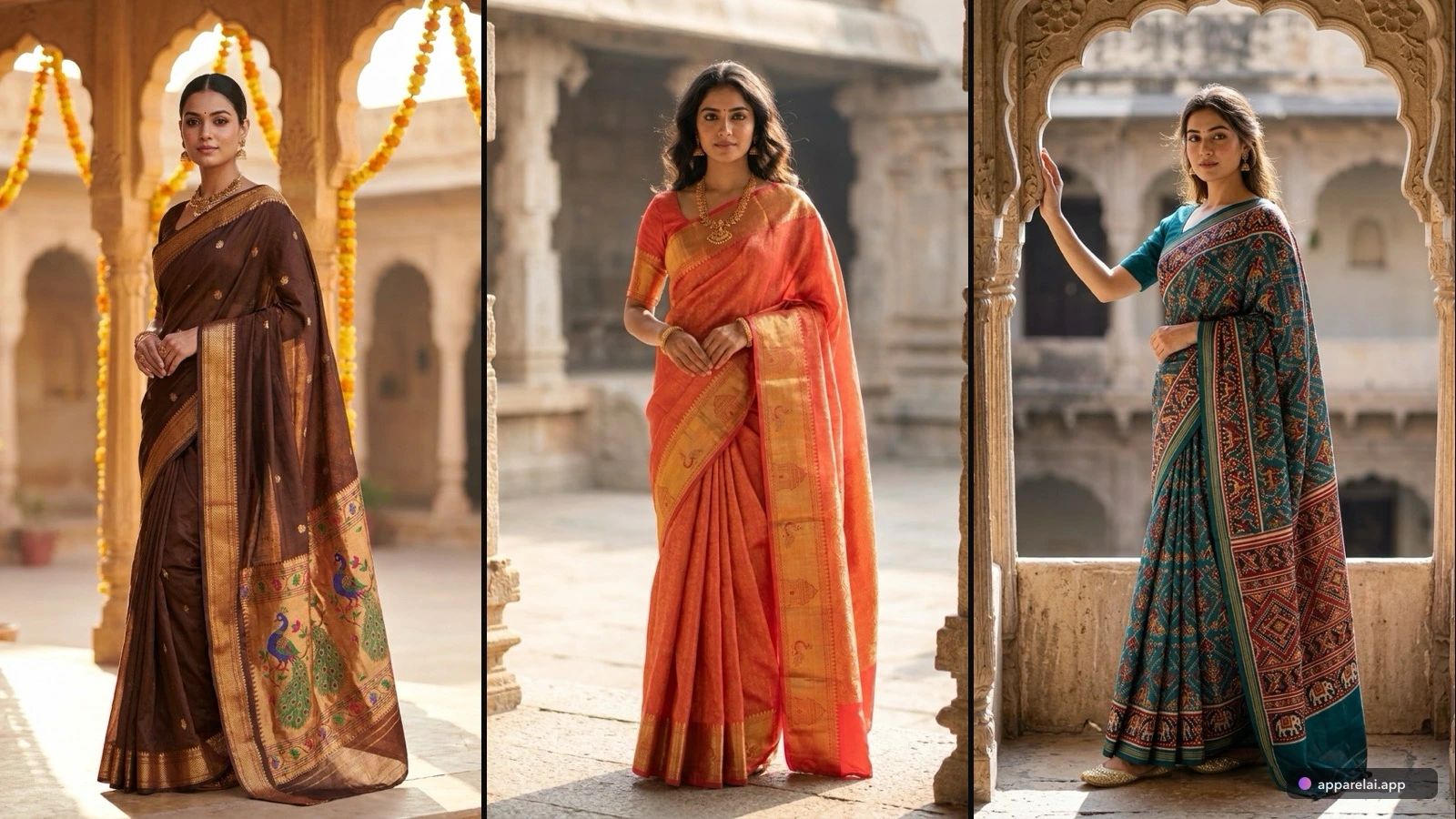
Ask anyone in AI fashion photography what the hardest garment to get right is, and the answer is almost always the same: sarees.
A saree isn't just a piece of fabric. It's six yards of material draped in dozens of different styles, with borders, pallus, and embroidery details that buyers scrutinize before purchasing. Getting this right with AI is challenging, but it's possible. Here's how.
Why sarees are the hardest garment for AI
Draping complexity: A Nivi-style drape looks completely different from a Bengali drape, a Gujarati drape, or a Maharashtrian drape. The same saree can look like a completely different garment depending on how it's draped. AI needs to understand these draping styles to produce convincing results.
Fabric behavior: Chanderi silk catches light differently than Banarasi brocade. Georgette flows differently than cotton. Chiffon is sheer in ways that challenge even advanced AI models. The fabric behavior in the generated image needs to match what the buyer will receive.
Detail preservation: Saree buyers look at border designs, pallu patterns, zari work, and embroidery motifs. If the AI smooths out these details or distorts the patterns, the image fails. A Kanjeevaram saree with incorrectly rendered temple borders will not sell.
Handwoven nuances: Mass-produced sarees have uniform patterns that AI handles well. But handwoven sarees have intentional irregularities that are marks of quality, not defects. AI trained on uniform textiles can sometimes "correct" these irregularities, which is exactly the wrong thing to do.
What works for AI saree photography
Start with a good input image. This matters more for sarees than any other garment. Your flat lay or mannequin photo must clearly show:
- •The full saree with borders visible
- •Pallu design and pattern
- •Fabric texture and weave
- •Color accuracy (especially for silk, which has natural sheen)
Choose the right draping style. Decide which draping style works best for your target market before generating the AI image:
- •Nivi style (most common, works for marketplace listings)
- •Bengali style (good for Tant, Jamdani, and Bengali sarees)
- •Gujarati style (pallu draped to the front)
Most AI tools default to Nivi-style draping, which works for the majority of listings.
Detail shots are non-negotiable. Even if your main on-model shot is AI-generated, supplement it with real photographs of:
- •Border close-up showing weave/embroidery detail
- •Pallu pattern and design
- •Fabric texture shot (shows the weave quality)
- •Blouse piece (if included)
These detail shots build buyer confidence that the saree matches what they see in the model shot.
Tips for specific saree types
Silk sarees (Kanjeevaram, Banarasi, Mysore):
- •Lighting is critical. Silk has a natural sheen that needs to be visible
- •Gold zari work needs to catch light properly
- •Use a wrinkle-free flat lay as input. Silk wrinkles are hard for AI to distinguish from drape folds
Cotton sarees (Tant, Khadi, Handloom):
- •Texture is the selling point. Make sure your input image shows the weave clearly
- •Cotton drapes differently than silk. AI handles cotton drape well since the fabric has less sheen to simulate
Georgette and chiffon sarees:
- •These are semi-transparent fabrics. AI struggles most here
- •Consider photographing on a mannequin (showing some drape) rather than flat lay
- •The existing drape gives AI a better reference than trying to simulate sheer fabric behavior from a flat image
Printed sarees:
- •AI handles prints well as long as your input image is sharp
- •Make sure the full pattern repeat is visible in your source photo
- •Color accuracy matters enormously. Match your white balance before uploading
The marketplace angle
Each Indian marketplace has specific expectations for saree images:
Myntra: 3:4 ratio, white background, model wearing the saree in Nivi drape. Minimum 6 images including draping detail and pallu close-up.
Flipkart: 1:1 ratio, CMYK color space, model required (no mannequin). Show the full saree with borders clearly visible.
Meesho: 1:1 ratio, authentic-looking images. Meesho buyers often share product images on WhatsApp, so the saree should look appealing at smaller image sizes.
Amazon India: Minimum 2000 px, white background, on-model. Amazon's zoom feature means your detail shots need to be high resolution.
The bottom line
AI saree photography has come a long way. For standard saree types with clear prints and patterns, the results are now good enough for marketplace listings. For premium handwoven sarees, AI works best as a complement to traditional photography: use AI for the on-model hero shot, real photos for detail and texture.
The sellers getting the best results are the ones who spend time on their input images. A well-lit, wrinkle-free flat lay of a saree with clear border and pallu details will produce dramatically better AI output than a quick phone snap.
Ready to try AI product photography?
Start with 3 free images. No credit card required.
Start Free Photoshoot